Tag: Beef Ribs

  • How to Smoke Beef Back Ribs

    How to Smoke Beef Back Ribs

    So you picked up a beef rib rack and you’re thinking about firing up the smoker. Good choice. Beef back ribs don’t always get the spotlight, but when cooked right, they deliver deep beef flavor, great bark, and a satisfying bite that feels earned.

    If this is your first time cooking BBQ beef back ribs, relax. We’re going to treat these ribs like pork ribs. We will dust them with a Texas style rub, smoke, wrap, rest and let the smoker do the work. This method produces meaty beef ribs that are tender, juicy, and packed with classic barbecue flavor.

    Before you dive in, I also put together a full YouTube video that walks through this cook step-by-step on my Weber Smokey Mountain. If you like seeing the process in real time—fire setup, bark development, and tenderness checks—be sure to watch the video alongside this guide.

    What Are Beef Back Ribs?

    Beef back ribs come from the dorsal section of the rib cage, located just beneath the prime rib. When ribeye roasts or prime ribs are cut, the bones are left behind with a generous amount of meat still attached.

    Beef Back Ribs - What Are Beef Back Ribs

    Despite what some folks think, these are not a substandard cut. When smoked low and slow, barbecued beef back ribs become rich, beefy, and incredibly satisfying. They don’t eat like short ribs, they’re leaner, but when cooked properly, they are tender and full of flavor.

    Rib Prep Process

    Prepping a beef rib rack is simple and doesn’t require much trimming. For this cook, I left the fat intact and only rounded the corners for even cooking. I also left the membrane on the bone side.

    Beef Back Ribs - Trimming Beef Ribs

    Pro tip: Unlike pork ribs, it’s recommended to leave the membrane on beef back ribs. Removing it can cause the ribs to fall apart as they cook.

    Season Those Beef Back Ribs

    You can season smoked beef back ribs with just about any beef-forward rub. I often reach for Butcher BBQ Steak and Brisket Rub, which blends salt, pepper, garlic, and a hint of lemon oil.

    For this cook, I went with a simple Texas-style approach, only salt and pepper to let the beef shine.

    I don’t normally use a binder, but for this beef rib rack, I wanted to make sure the pepper adhered properly.

    1. Lightly sprinkle Worcestershire sauce over the ribs and spread it evenly.
    2. Apply freshly ground black pepper first.
      • Pepper tends to bounce off if other seasonings are applied first.
      • More pepper means better bark on BBQ beef back ribs.
    3. Finish with a generous layer of fine sea salt.
    Seasoning Beef Back Ribs

    Once seasoned, place the ribs in the refrigerator while you fire up the smoker. A rest of 45–60 minutes is ideal. This acts as a dry brine and helps build flavor.

    Prepare the Smoker

    For this cook, I’m using a 22-inch Weber Smokey Mountain, but this technique works just as well on a pellet smoker, ceramic cooker, offset, or drum.

    I set up my WSM using the Minion Method and an Arbor Fabricating charcoal basket. The smaller holes allow the charcoal to burn longer and more evenly.

    For smoke, I used three chunks of hickory. Hickory pairs perfectly with beef and gives smoked beef back ribs that classic barbecue aroma.

    I lit 12–15 briquettes in a charcoal chimney using two paraffin cubes. After about 15 minutes, they were ready to add to the smoker. Allow another 15–20 minutes for the pit to come up to temperature.

    Shoot for a grate temperature of 240–250°F.

    Let’s Get to Cooking

    Once the smoker is steady, place the beef rib rack on the grate, bone side down. At this stage, we’re building bark and letting the smoke do its job.

    Cook the ribs until the internal temperature reaches 165–175°F. This is typically where the bark has set and the ribs are ready to wrap.

    Time to Wrap the Ribs

    When the ribs hit around 175°F, wrap them tightly in two layers of butcher paper. Wrapping helps push through the stall while keeping the ribs moist.

    Wrapping Beef Ribs

    Return the wrapped ribs to the smoker and continue cooking until the internal temperature reaches 195–200°F.

    Wrapped BBQ Beef Back Ribs

    The Beef Back Ribs Are Ready to Rest

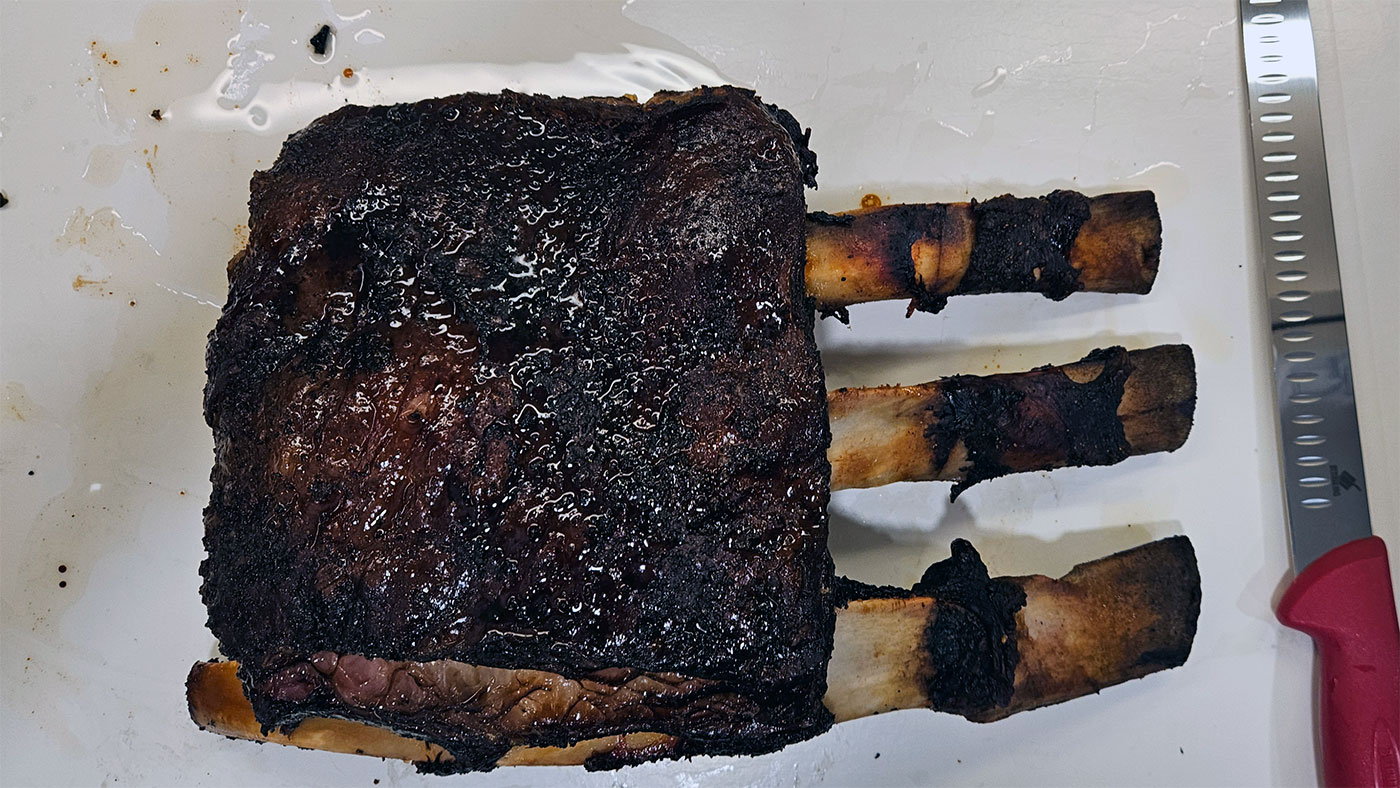
    After about 9 hours of low-and-slow cooking, these smoked beef back ribs were sitting at 198°F. Temperature matters, but the tenderness of the meat matters more.

    Using an instant read thermometer, probe between the bones. When the probe slides in with little resistance, the ribs are done.

    Remove the ribs from the smoker and let them rest, still wrapped, for at least 30 minutes. This allows the juices to redistribute and finish tenderizing the meat.

    In Conclusion

    If you’ve never cooked barbecued beef back ribs before, this is a great place to start. They’re forgiving, full of beef flavor, and incredibly rewarding when done right.

    Smoked Beef Back Ribs

    If you want to see exactly how these ribs cooked on the Weber Smokey Mountain, check out the full YouTube video (Beef Back Ribs on the 22 Inch Weber Smokey Mountain | Cold Weather Cooking) that goes with this post. Watching the process can give you extra confidence on your first cook.

    It’s your turn, fire up the pit, trust the process, and enjoy some seriously meaty beef ribs.
  • Beef Dino Ribs – Brisket on a Stick

    Beef Dino Ribs – Brisket on a Stick

    There’s something primal about a slab of beef dino ribs sizzling away in the smoker. The name alone sounds like it belongs in a caveman’s cookbook, and honestly, that’s not far off.

    These massive bones packed with tender, juicy beef are often called “brisket on a stick.” When done right, smoked dino ribs deliver that same deep beef flavor and rich bark that brisket fans look for.

    What Exactly Are Beef Dino Ribs?

    When folks talk about dino ribs, they’re usually referring to plate short ribs. These are the big, meaty bones cut from the lower section of the cow’s rib cage. These aren’t your typical short ribs from the grocery store.

    Each bone can weigh over a pound and looks like something Fred Flintstone would throw on the grill. It’s no wonder they’re sometimes called dinosaur beef ribs. They’re packed with marbling, collagen, and pure beef flavor.

    Dino ribs rank as one of the most rewarding cuts you can smoke low and slow.

    If you’ve never cooked smoked beef dino ribs before, think of them as the love child between brisket and a prime rib roast. They’ve got the bark and smoke ring of brisket, but the tenderness and juiciness that rival any high-end steakhouse.

    The Prep: Keep It Simple

    For these big cuts, simple always wins. I start with a light trim, rounding the corners and removing any loose fat. My go-to tool is the Butcher BBQ Boning Knife for precise trimming.

    A quick coating of binder is optional. I like a little yellow mustard when I use a rub binder.

    Then I season generously with a Texas-style rub: coarse black pepper, kosher salt, and that’s it. When you’re dealing with beef this good, you don’t need to overcomplicate it.

    If you really want to add some serious flavor, try injecting the ribs with a beef brisket injection marinade. I recommend Butcher BBQ Brisket Injection — this beef injection helps add moisture and another layer of rich, beefy flavor deep into the meat.

    The Cook: Low and Slow

    I smoked these dino ribs on my Weber Smokey Mountain at 250°F using post hickory wood chunks for that classic BBQ flavor.

    These ribs will take anywhere from 6 to 10 hours of cooking time. However, this depends on thickness, so plan for a long, relaxing day by the pit. Personally, this is my happy place — some music playing, a cold drink in hand, and the Weber Smokey Mountain doing its thing!

    I don’t wrap mine until they hit around 170–175°F internal temp. Then I’ll wrap them tight in butcher paper to protect that delicious bark while they finish.

    After wrapping, the internal temp we’re looking for is around 203°F, but don’t go by temp alone. Use a temp probe and probe the sides. You’re looking for that “soft butter” feel with zero resistance. That’s when you know the dino ribs are ready!

    Once the dino ribs have finished cooking, I transfer them to a cooler to rest for about an hour.

    After the rest, I transfer the ribs to one of my Butcher BBQ Disposable Cutting Boards. It keeps cleanup simple and gives me plenty of room to work without losing any juices.

    The Payoff

    When you pick up one of these ribs, you’ll know exactly why they’re called “dino” ribs. The bone alone looks like a handle made for kings. The bark is dark and crusty, the inside jiggly and buttery tender.

    Take that first bite and you’ll get all the smokiness, salt, and beef flavor that backyard barbecue dreams are made of. Whether you call them smoked beef dino ribs or dinosaur beef ribs, one thing’s for sure — they’ll steal the show at any cookout.

    This is one of those cooks that takes you back — to when weekends meant firing up the pit, grabbing a cold drink, and letting the world slow down for a while. No apps, no notifications, just you, the smoke, and the sound of sizzling beef.

    In Conclusion

    If you’ve never smoked beef dino ribs, make this your next weekend cook. It’s the kind of meal that’ll turn a quiet afternoon into a backyard event.

    Fire up the pit, grab your favorite rub, and make some memorie, because that’s what barbecue’s all about.

  • How to Cook Beef Plate Ribs

    How to Cook Beef Plate Ribs

    Beef plate ribs are one of my favorite proteins to cook on the smoker. They have all the delicious beef flavor of a brisket, but the cook time is a bit shorter. Let’s talk about how to cook them!

    What are Beef Plate Ribs

    First, let’s talk about what beef plate ribs are. They are the thickest and meatiest ribs from the cow. You may have heard these ribs go by different names such as “Dino ribs”, “plate ribs”, and “plate short ribs” just to name a few.

    Plate ribs are cut from the short plate primal section; this is the lower belly of the cow above the flank. These beef ribs are meaty, beefy, and they have some incredible marbling! They are a fantastic beef plate ribs option for low and slow cooking on the smoker!

    What Should You Season Beef Plate Ribs With

    When preparing to cook beef plate ribs, you have many seasoning options to choose from.

    If you are a minimalist, you only need two ingredients: Salt and Pepper. This is the BBQ seasoning that many pitmasters prefer. 16 mesh pepper will attract the smoke and produce the bark, and the salt will dry brine the meat. This is an amazing flavor combination for almost any cut of beef!

    Now, I like to use Butcher BBQ Steak and Brisket Rub. This rub is a little different than the traditional Texas Style BBQ. Butcher BBQ Steak and Brisket Rub was inspired by Texas brisket with a bit of a twist – some sugar, for a touch of sweetness, and lemon pepper for a twist!

    Beef Plate Ribs - Butcher BBQ Steak and Brisket Rub

    Lemon Pepper on Beef Ribs

    You might be thinking, “Lemon pepper on beef ribs?” and if not, you are now! Hang with me. I thought the same thing, but when I first tried it, the ribs were delicious!

    My wife is not a fan of beef ribs, until I used Butcher BBQ Brisket and Steak Rub. The first time I used the rub, I told her this was a different recipe and I think she will like it. The rest is history!

    So if your wife is not a fan of Texas style beef ribs, this BBQ rub could be a winner for you as well!

    Let’s Get to Cooking

    Ok, I know, let’s get back to how to cook beef plate ribs.

    Now, beef ribs don’t require a lot of trimming. Remove any pieces that are hanging off that are thin. These are parts of the ribs that will burn up during the cook.

    Dust your ribs evenly with Butcher BBQ Steak and Brisket Rub. Then press the rub into the meat and let them sit in the fridge. I let mine rest for an hour with the rub on while I fire up the smoker.

    What Temp to Cook Beef Ribs

    The preferred method to cook beef plate ribs is “low and slow”. I shoot for a grate temp of 225°F and not going over 250°F.

    Beef Plate Ribs - Weber Smokey Mountain

    Why Low and Slow

    Beef plate ribs are meaty and thick! They have a lot of intramuscular fat, and the meat is pretty tough when raw.

    You want to slow smoke the ribs until they hit an internal temp of 165–170°F. This gives the meat time to absorb the smoke and form bark! The internal temp varies depending on if the rub has set and how the bark looks.

    I have had times where I go upwards of 175–180°F before I wrap ribs because the rub has yet to set.

    You will want to wrap these monster ribs as tight as you can in butcher paper. Put them back on the pit and let them continue to cook until the internal temp hits 200–205°F.

    Temperature is somewhat irrelevant at this point because you want that “knife in hot butter” feeling. Take a probe thermometer or toothpick and probe your beef ribs. You want very little to no resistance when probing the ribs.

    With my most recent cook, the internal temperature was 207°F before I pulled them to rest.

    Let the Beef Plate Ribs Rest

    Now the rest begins! Your beef ribs have been cooking for several hours and they need to rest for 30–60 minutes. This is an essential part of the process, as the meat cools it will absorb some of the juices around the meat.

    Beef Plate Ribs - Plate Short Ribs

    Pro tip – I like to wrap my ribs in aluminum foil and place them in a cooler. The addition of the aluminum foil around the butcher paper helps to keep all the juices contained for easier cleanup.

    In Conclusion

    So there you have it—now you know how to cook beef plate ribs. It’s very easy; it just takes some preparation and a little patience. These beef ribs cooked in roughly 6 and a half hours.

    Butcher BBQ Steak and Brisket Rub did a great job with the bark and my family loved them!

    We put together a YouTube video showing the cooking process from start to finish!

    Now it’s your turn. You have the knowledge, get the tools, and let’s get to cooking!

    Also, please post a comment below and let us know how your cook turned out! We love to hear from our customers!