Author: Pitmaster Essentials

  • What is a Good Rib Rub?

    What is a Good Rib Rub?

    What is a good rib rub? Well, I am glad you asked. A good rib rub is a balance of spices to enhance the flavor of ribs. Let’s talk specifically about dry rub on pork ribs.

    What Ingredients are in a Good Rib Rub?

    A good rib rub can consist of any combination of the following ingredients:

    • Salt
    • Pepper
    • A Sweetner – Brown Sugar, Honey Powder, or Molasses
    • Garlic Powder
    • Onion Powder
    • Smoked Paprika
    • Cayenne Pepper (optional), for a little heat!

    Now these are just a few ingredients for a rib seasoning. However, most dry rubs contain these main ingredients. 

    When formulating a dry rub for ribs, these ingredients are mixed in different ratios. This will differentiate the flavor profile considerably.

    If a seasoning is a little sweeter, it will have more brown sugar vs a good rib rub that is smokey. The smokey profile will come from more smoked paprika as one of the main ingredients.

    If a rub is spicy, it will have a touch of cayenne to add a little head with the sweet!

    How to Apply a Dry Rub for Ribs

    After removing your ribs from the packaging, rinse, and pat dry with a paper towel. Now, applying a dry rub on pork ribs is a piece of cake.

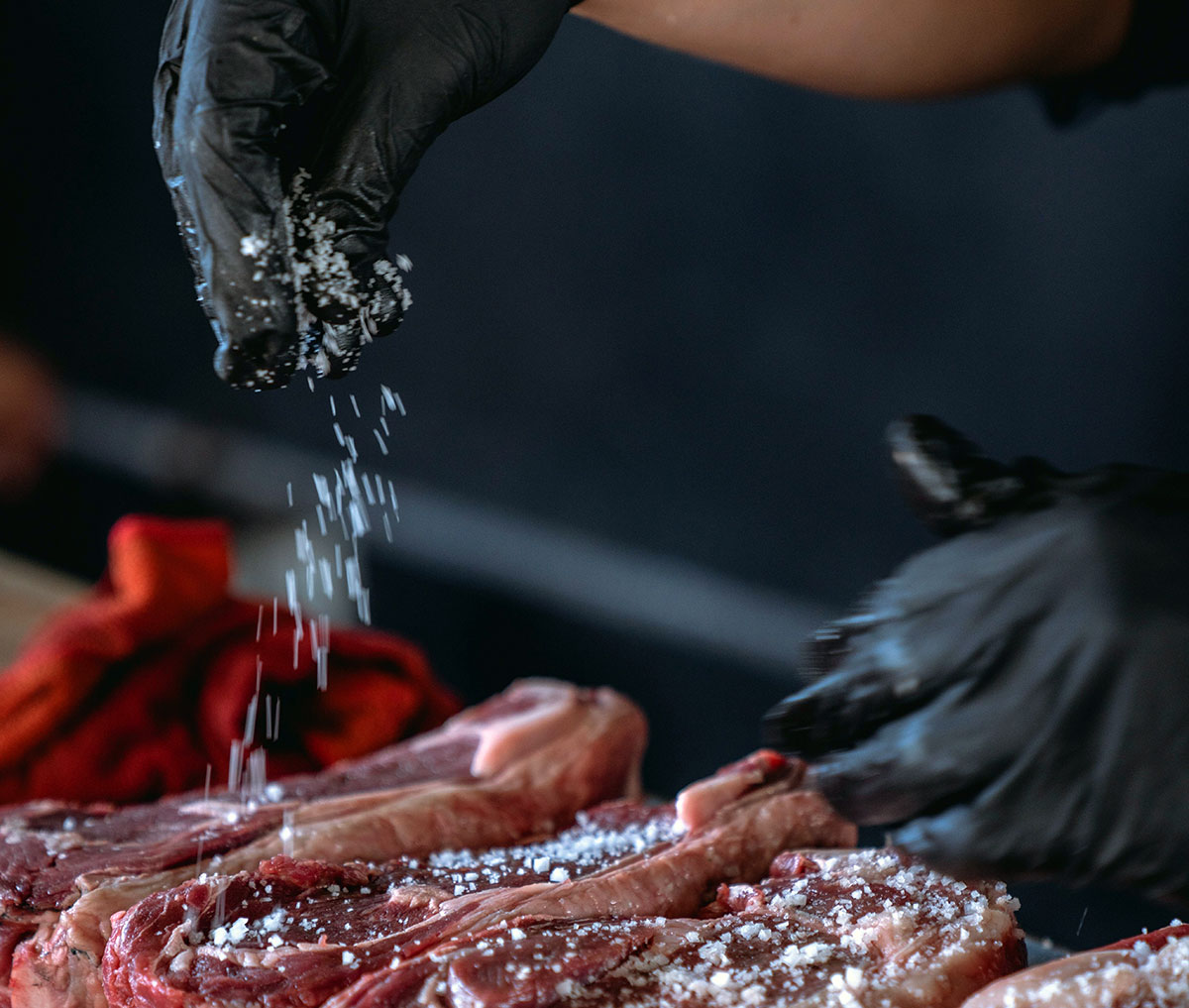
    If you are using a shaker bottle, simply shake evenly across the ribs. Make sure to apply enough to cover the edges of the rib and that is pretty much it! Flip your ribs over and repeat the process.

    No shaker bottle, no worries! Pour some of your rib seasoning into a bowl. Now pinch some seasoning out of the bowl, and sprinkle evenly across your ribs. Again, just make sure you distribute the rub evenly.

    Using a Binder

    Another way to apply a good rib rub is to use a binder. After patting your ribs dry, use a liquid binder and then apply the rub to your ribs. A binder can be olive oil, Worcestershire sauce, or just use some water.

    The benefit of using a binder is to help the dry rub stick to the surface of the ribs. This helps to keep the rub from falling off.

    How Long do you Leave a Rib Rub on your Ribs?

    We would suggest leaving your rib rub on your ribs for 15-30 minutes. This gives the salt and other seasonings time to penetrate the meat. After about 30 minutes the ribs should be “sweating”, and a paste has formed.

    This is only a suggestion as many pitmasters will simply apply the rib rub, then straight to the smoker.

    Storing your Rib Rub

    A dry rub seasoning for ribs can be stored in a cool dry place for up to six months. However, we recommend using your rub within about three months.

    In Conclusion

    A good rib rub is one that has that meets your flavor profile. Whether you like sweet, smokey, or spicey it all comes down to what are looking for.

    We have a pork rib seasoning that is perfect for St. Louis ribs or baby back ribs. It is Butcher BBQ Honey Rub. It is an amazing honey BBQ rub that was voted “Best Rub on the Planet” in 2022.

    If a honey rub is not on your radar, we have a few other rib rubs to choose from.

    Let us know in the comment section below what you look for in a good rib rub!

  • What is SPG Seasoning?

    What is SPG Seasoning?

    Ahh SPG Seasoning! You have heard about it, and you want to know what it is. SPG stands for Salt, Pepper, Garlic. These three ingredients are the base flavoring a lot of pitmasters use when preparing to BBQ.

    What is in SPG Seasoning

    Three ingredients are in a SPG Seasoning. These ingredients are Salt, Pepper, and Garlic.

    These ingredients are all you really need to make some fantastic BBQ.

    Some pitmasters refer to this combination as “Texas Rub”.

    Texas Rub

    Texas rub is more pepper heavy mix that is used as SPG rub for brisket. Pepper is the main ingredient that forms that delicious bark.

    A normal SPG Seasoning would include equal parts salt, pepper, and garlic powder. However, with a Texas rub, it is common in areas to have 90% pepper, 5% salt, and 5% garlic ratio.

    Let me tell you, that is a lot of pepper but think of the delicious bark formation on a Texas style brisket! My mouth is watering just thinking about it!

    Are you interested in making homemade SPG Seasoning

    If you are interested in making your own SPG Seasoning, it is very easy to do. We recommend the following ingredients:

    • Coarse Kosher Salt
    • 16 Mesh Black Pepper
    • Granulated Garlic

    You will also find numerous recommendations on how to change the ratio. In our example, we will keep it simple:

    • Measure equal parts of each salt, pepper, and granulated garlic
    • Mix in a bowl
    • Add the SPG to a shaker top bottle

    That’s it! Simple right? Now you are ready to add it and start cooking!

    Pro tip – Hold onto empty seasoning bottles that have shaker tops. These are perfect for homemade BBQ rubs.

    How Much SPG Seasoning Should You Make

    Good question. It depends on you application. If you want to make a lot of SPG Seasoning to have on hand then use one cup of each ingredient.

    If you are only applying some SPG rub for a single cook, like with a brisket, maybe use three tablespoons of each ingredient.

    It is a bit of a trial and error to determine how much you need for each application. We cook a lot, so we like to have SPG on hand. We tend to make larger batches and store it in a shaker bottle.

    How to Store SPG Seasoning

    Homemade SPG Seasoning is very easy to store. Simply put it in a cool, dry place.

    It is possible that it may clump up after sitting for a while. Nothing to worry about, simply tap the side of the bottle on the counter and it will break up any clumps.

    You can also use a fork to break up any SPG that clumps in your bottle as well.

    How to Apply SPG Seasoning

    Applying SPG Seasoning should be evenly distributed across your meat. This can take some practice, so be patient.

    Hold your shaker bottle 3-6 inches above your protein shake the bottle to spread the seasoning across your meat.

    If your SPG rub does not spread evenly, do not worry. Your food will still taste great, and you will get better as you continue to cook!

    In Conclusion

    So, there you have it. Now you know what SPG Seasoning is and even how to make a homemade SPG Seasoning. It is a simple seasoning, but a truly amazing flavor enhancer for any meat! It is a real pitmaster essential!

    We also have an amazing SPG Rub that will take out all the guesswork! It was crafted to create the perfect, flavorful crust that true BBQ enthusiasts are after. Butcher BBQ Texas Bark is a delicious rub to add to your spice cabinet!

    Now get out there start cooking some amazing backyard BBQ!

  • What is BBQ Seasoning?

    What is BBQ Seasoning?

    Have you ever wondered what is BBQ seasoning? Well let us take a look at what it is and where it came from.

    In a Nutshell

    In a nutshell, it is a blend of spices that we now use as a base for BBQ. Speaking of is it BBQ, Bar-b-q, or barbecue? I guess that is a topic for another day.

    Anyway, back to the seasoning discussion. We now use BBQ seasonings as a BBQ pit essential. Anytime we prepare our meat for the smoker, we add delicious seasoning.

    BBQ seasoning different from BBQ Rub

    BBQ seasoning can also be referred to as BBQ rubs. However, there is a slight difference between the two. A barbeque seasoning is usually finer to add seasoning to the meat. A barbeque rub has a slightly more coarse texture for creating a crust or “bark” on the meat.

    Like I said, they are basically the same, just slightly different. They are both applied before putting your protein on the smoker.

    Pro tip – Do not rub your rub or seasoning! You want to press the seasoning or rub into the meat.

    Some BBQ History

    Ok, here is a little BBQ history. I know I know, you are not in school, but bear with me.

    BBQ seasoning originated in the early 1600s. Spices were introduced when native Africans and Afro-Caribbean slaves were brought to America. Their homeland was full of different interesting spices they used when cooking meat over an open flame.

    These spices were then brought to the North America. Over the years as cooking evolved, with the indigenous cooking methods where meats were slow cooked over open flames. This method combined with these spices, eventually BBQ was created that we know today.

    BBQ seasoning – What about the ingredients?

    Well that is a good question. It could be as simple as:

    • Salt
    • Pepper

    Or a BBQ seasoning could be more complex containing any of the following ingredients:

    • smoked paprika
    • brown sugar
    • garlic powder
    • onion powder
    • mustard powder
    • chili powder
    • cumin
    • black pepper
    • salt
    • cayenne pepper (optional)

    In Conclusion

    At the end of the day a BBQ seasoning is a blend of different herbs and spices. The numerous seasonings out there just mix and match the combinations of the ingredients to make amazing additions to BBQ.

    Now that you know about seasonings, might I suggest our delicious Honey BBQ Rub? It was voted “Best Rub on the Planet” in 2022! We have several additional BBQ Seasoning Rubs to choose from.

    What are you waiting for? Now it is time to fire up that smoker and get to cooking!

  • Texas Brisket Rub for Smoking

    Texas Brisket Rub for Smoking

    When we think about Texas Brisket Rub for Smoking, specifically Texas style brisket, it brings a smile to our faces. When we were kids, dad would fire up the pit for an all-nighter. When we woke up the next morning, we knew it was close to being done. We could smell the brisket cooking while we were outside playing. After lunch, he pulled it off the pit to rest. Dinner was incredible and let me tell you, those were the days!

    Do you remember?

    Do you remember those days? Do you want to cook a brisket just like dad used to? Do you have issues creating the same bark formation that he mastered when smoking a brisket?

    Well you are in luck! We have a Texas brisket rub for smoking that will build the Texas style bark you remember! Butcher BBQ Texas Bark is just that rub! It is an SPG rub with some added extras for amazing bark forming.

    What Makes a Texas Brisket Rub Unique?

    Texas brisket dry rubs are known for their simplicity as they primarily consist of three ingredients: salt, pepper, and garlic. Butcher BBQ Texas Bark adds a couple additional ingredients to help with that delicious bark formation. However, it really comes down to the right balance of ingredients. Butcher BBQ has put in the time to get the balance just right to create a flavorful crust!

    Butcher BBQ Texas Bark - Texas Brisket Dry Rub

    Texas Brisket Rub for Smoking – With and Without Rub

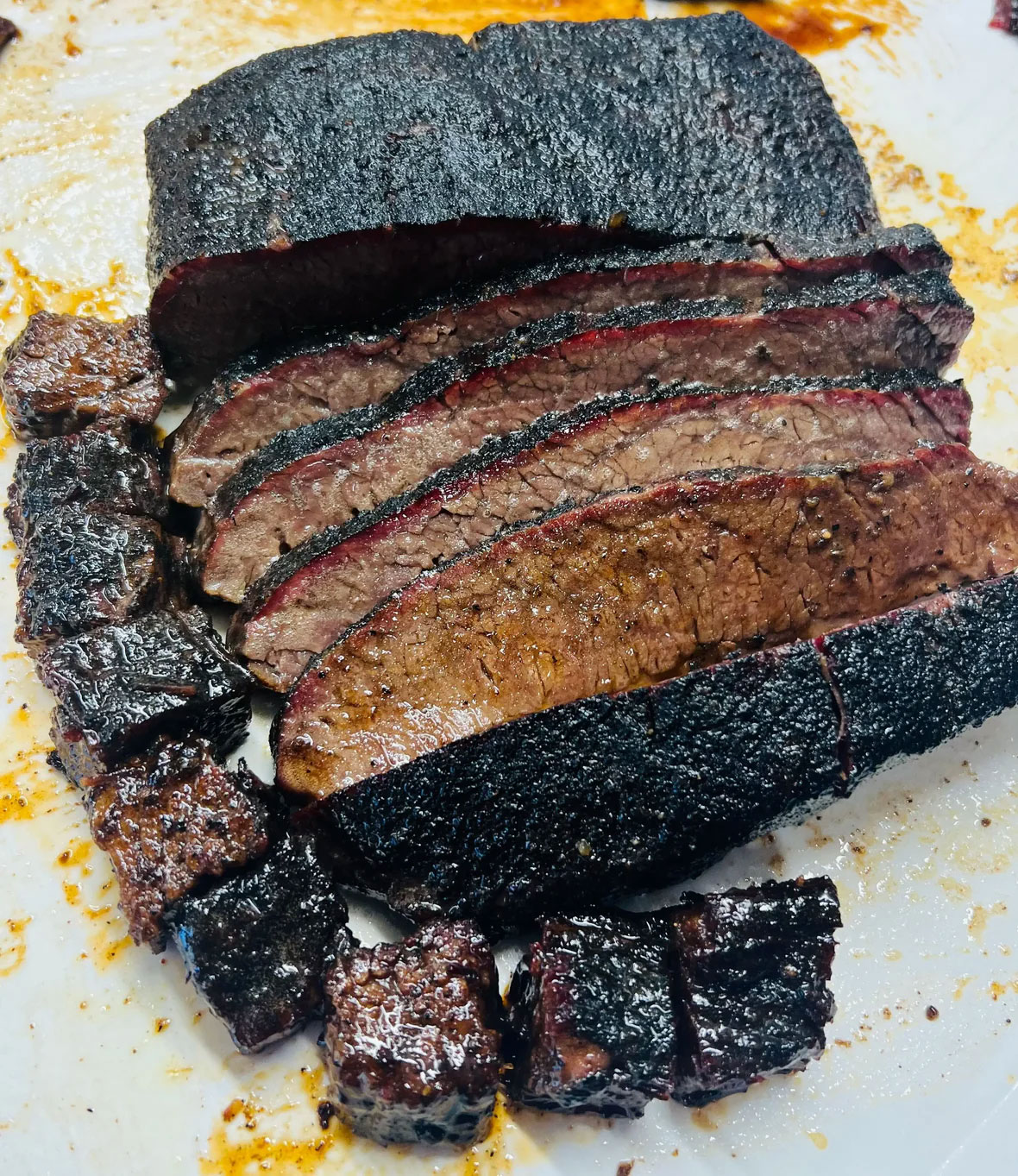
    When we compare our Texas brisket dry rub to a brisket without the rub, well the results are noticeable. The brisket on the left is without Texas Brisket Rub for Smoking and the brisket on the right has the bark we are looking for! Butcher BBQ Texas Bark is one of the best Texas brisket rubs out there and the results speak for itself.

    Texas Brisket Rub for Smoking - With Texas Bark - Without Texas Bark

    Texas Brisket Rub for Smoking – How to Apply

    Seasoning a brisket is quite easy. After you have prepared the brisket by trimming the excess fat, hold the bottle 3-6 inches above the brisket, and apply the rub evenly. Remember not to rub your rub! I know, it is kind of weird to say, but you want to press the rub into the meat.

    Now this is a large piece of meat, so do not skimp here. You can apply a liberal amount of Texas brisket dry rub to your brisket, just make sure you distributed as evenly as possible.

    Smoker Prep and Smoke the Brisket

    Your pit should be between 225-250 degrees at the grate for low and slow. If you want to cook it hot and fast, adjust your grate temp to 325-350 degrees. We prefer low and slow cooking approach for new pitmasters. If you cook it hot and fast, the flat can dry out and become very dry and tough. Plan to monitor a low and slow cook for 12-18 hours, depending on the size of your brisket.

    In Conclusion

    A Texas Brisket Rub for Smoking is your secret weapon for amazing bark on an amazing brisket! It captures the essence of Texas—bold, simple, and flavorful. The key is in simplicity, so do not over think it! Fire up your smoker, add some Texas Brisket Rub for Smoking and let your brisket speak for itself.

    We also suggest reading our blog post on “How to Smoke a Brisket”.

  • How to Smoke a Brisket

    How to Smoke a Brisket

    That’s a good question. Smoking a brisket is the ultimate when it comes to BBQ! However, it can be intimidating. The good news is if cooked correctly, your brisket will be tender, juicy, and full of flavor! In this article we will be discussing how to inject a brisket and smoke a brisket low and slow.

    Before you Begin

    Before you begin you will want to decide if you want to use a brisket injection. We would recommend some type of beef brisket injection to introduce flavor and moisture into the brisket flat.

    Smoking a brisket can dry out the flat because it lacks intramuscular fat or “marbling”. The brisket point contains a lot of marbling, so it is not necessary to inject the point.

    Trimming the Brisket

    You will find many different opinions about whether to trim or not to trim a brisket before you smoke a brisket. We would suggest trimming the fat cap to an even quarter of an inch across the brisket.

    You can shape it to make the brisket more “aerodynamic” for the smoke to flow across. Or you can simply not trim anything off your brisket and just smoke it!

    Injecting the Brisket

    A lot of pitmasters only use a brisket injection for the flat, but you can also inject the point as well. So now that you have decided to inject your brisket, we would like to recommend a good brisket injection, Butcher BBQ Prime Brisket Injection. It is an amazing brisket injection for adding beefy flavor and moisture to your brisket.

    Next, follow the instructions on your injection to properly mix the brisket injection. Grab your beef brisket injector and shoot the mixture into the meat. We would suggest injecting the whole flat of the brisket in a checkerboard pattern.

    Adding Brisket Rub

    Now that you have injected your brisket, it is time to add some rub. You can simply use salt and pepper for an authentic Texas brisket, or you can add your favorite rub. We would suggest a salt pepper garlic rub or SPG BBQ rub to maximize your bark development.

    Hold the rub container 3-6 inches above the brisket and gently shake to evenly distribute the SPG BBQ rub. We would suggest lightly pressing the rub against the surface of the brisket. After adding the rub, set it in the refrigerator letting the rub and brisket injection penetrate the brisket for at least 30 minutes.

    Prepare the Smoker

    Ahh the different types of smokers! Whether you have a barrel type of smoker, ceramic smoker, or pellet smoker, the grate temperature will need to be between 225-250 degrees. Again, we are smoking a brisket low and slow.

    Time to start cooking

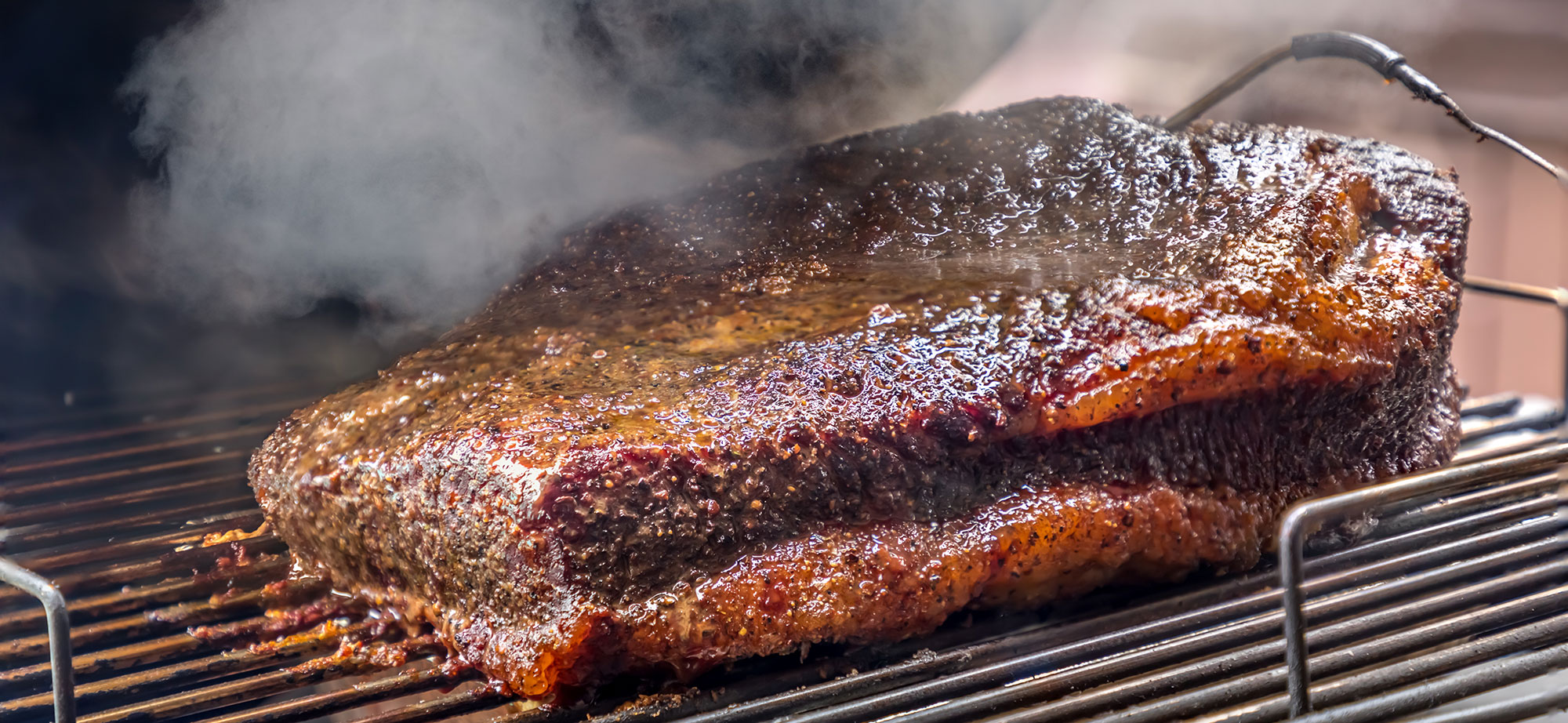
    Once your smoker stabilizes the temperature, it is time to start smoking the brisket! Your brisket injection and SPG BBQ rub have had time to penetrate the meat fibers. Place the brisket, fat side up, on the pit and let the cooking begin. We would also suggest adding a temperature probe in the middle of the flat. This way you can easily monitor the internal temp and know when it is time to wrap.

    The Stall

    The dreaded stall! The stall happens when the brisket internal temp reaches around the 160 degree mark. This is a phenomenon that occurs when the internal temp stops rising. Not to worry, this is normal! Keep your grate temp around 225-250, it will take several hours, but eventually you will push through the stall. Trust us, it is worth the wait!

    Time to Wrap

    There are a lot of debates on when to wrap, but a good internal temperature range would be 165-170. This depends on how much bark you want to form. You can wrap a brisket in aluminum foil or butcher paper.

    Here are a couple things to keep in mind. Butcher paper is generally preferred for maintaining a firmer bark. Aluminum foil traps moisture and could result in a softer bark. After wrapping, put the brisket back on the pit.

    Time to Rest

    After your brisket reaches an internal temperature of 200-210, it is time to rest. Your brisket should be probing tender using a thermometer or a toothpick. For the best results you will want to rest your brisket for at least 30 minutes, but several hours is best. Some recommend waiting until the internal temperature has cooled to 140 degrees before serving.

    Do not skip this step! Resting allows the brisket to absorb some of the juices back into the meat.

    In Summary

    Smoking a brisket takes time to prep and cook. While some of us struggle with patience, this truly pays off in the end. After smoking a brisket for 12-18 hours it produces an amazing, smokey, and delicious brisket your family will love!

    What are you waiting for? Fire up that pit and smoke a brisket!